

Close Menu
    Facebook X (Twitter) Instagram
    SciTechDaily
    • Biology
    • Chemistry
    • Earth
    • Health
    • Physics
    • Science
    • Space
    • Technology
    Facebook X (Twitter) Pinterest YouTube RSS
    SciTechDaily
    Home»Health»Universal Flu Vaccine Developed Using Novel Nanoparticles
    Health

    Universal Flu Vaccine Developed Using Novel Nanoparticles

    By Georgia State UniversityMarch 25, 20203 Comments4 Mins Read
    Facebook Twitter Pinterest Telegram LinkedIn WhatsApp Email Reddit
    Share
    Facebook Twitter LinkedIn Pinterest Telegram Email Reddit
    Universal Flu Vaccine
    A new nanoparticle vaccine using two flu proteins provides mice with long-lasting protection against various flu viruses, according to a study by the Institute for Biomedical Sciences at Georgia State University. It could become a universal flu vaccine for humans.

    Universal Novel Nanoparticle Flu Vaccine Protects Against 6 Influenza Viruses in Mice

    A novel nanoparticle vaccine that combines two major influenza proteins is effective in providing broad, long-lasting protection against influenza virus in mice, showing promise as a universal flu vaccine for people, according to a study by the Institute for Biomedical Sciences at Georgia State University.

    The double-layered nanoparticle vaccine contains the influenza virus proteins matrix protein 2 ectodomain (M2e) and neuraminidase (NA). Mice were immunized with the nanoparticle vaccine before being exposed to influenza virus, and they were protected against six different strains of the virus.
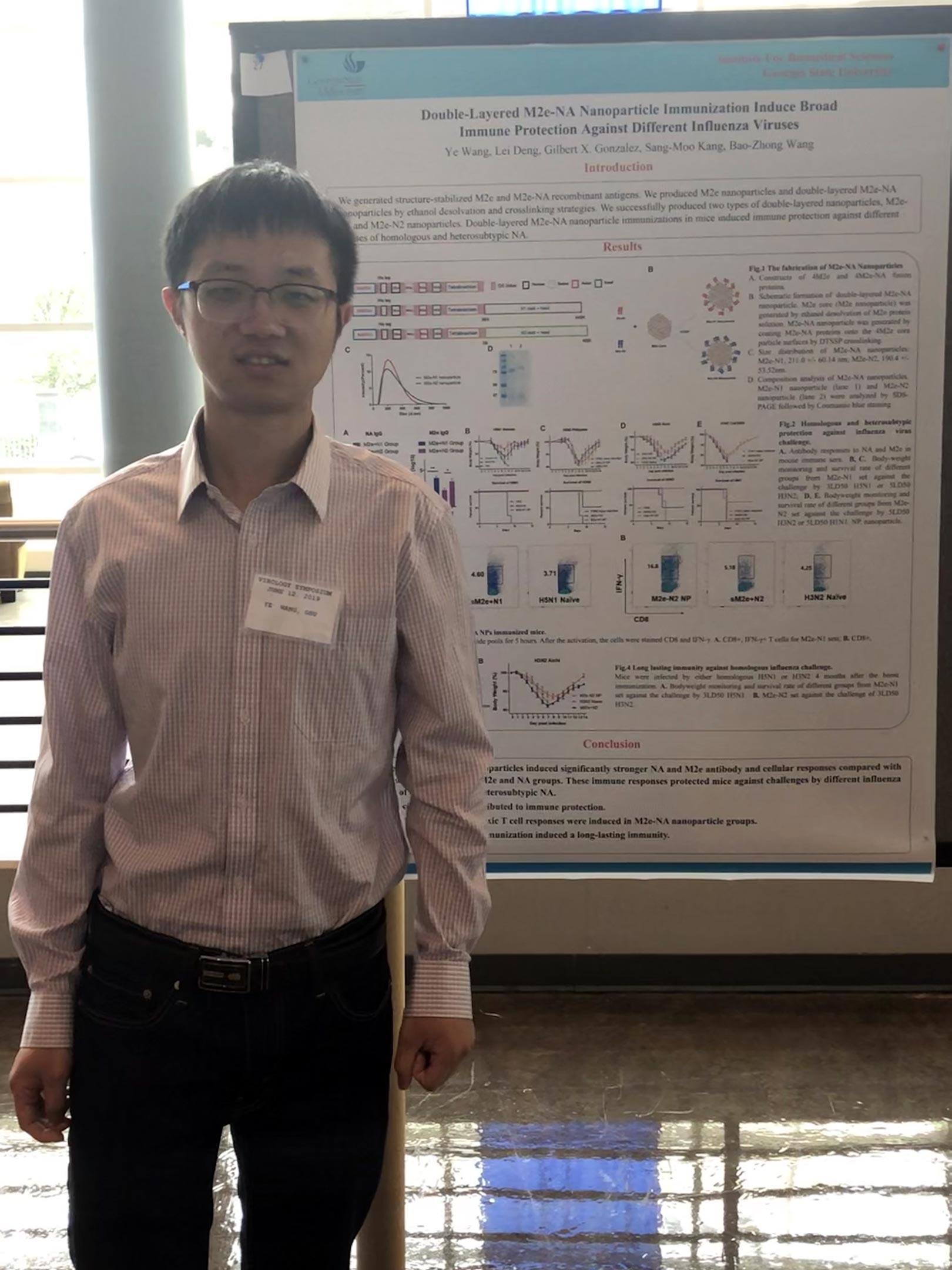
    Ye Wang, Georgia State University
    Ye Wang, first author of the study and a biology Ph.D. student working in Dr. Bao-Zhong Wang’s lab in the Institute for Biomedical Sciences at Georgia State University. Credit: Georgia State University

    The findings, which suggest this unique vaccine combination has potential as a universal influenza vaccine or component of such vaccines, are published in the journal Advanced Healthcare Materials.

    “This nanoparticle antigen combination conferred mice with strong cross protection,” said Ye Wang, first author of the study and a biology Ph.D. student working in Dr. Bao-Zhong Wang’s lab in the Institute for Biomedical Sciences. “It can protect mice from different strains of influenza virus. Each season, we have different flu strains that affect us. By using this approach, we hope this nanoparticle vaccine can protect humans from different strains of influenza virus.”

    Influenza, a contagious respiratory illness caused by influenza viruses, is a leading cause of death by infection. Seasonal flu vaccines are insufficient to prevent influenza outbreaks, and developing a universal influenza vaccine is the ideal strategy for eliminating public health threats of influenza epidemics and pandemics. A universal influenza vaccine would eliminate the need for vaccinations each season and offers universal protection against all influenza strains.

    The influenza virus protein M2e is found in all influenza virus strains, with each strain having a very similar version, and the protein has mutated very slowly over time. The protein NA is found on the surface of influenza virus and has also mutated much slower than other influenza proteins. This double-layered nanoparticle vaccine uses M2e as its core, and NA is coated on the surface.

    In the study, mice were exposed to one of six influenza virus strains after receiving the nanoparticle vaccine by intramuscular injection. The vaccine proved to have long-lasting immune protection, which was unchanged against viral challenges up to four months after immunizations.

    Dr. Bao-Zhong Wang, Georgia State University
    Dr. Bao-Zhong Wang, corresponding author and associate professor in the Institute for Biomedical Sciences at Georgia State University. Credit: Georgia State University

    “It’s important to mention that a lot of flu vaccines haven’t focused on NA before,” said Gilbert Gonzalez, co-author of the study and lab manager in Dr. Bao-Zhong Wang’s lab in the Institute for Biomedical Sciences. “NA is becoming a more important antigen for influenza vaccine research. Previously, it had been ignored or discounted because hemagglutinin (HA) is much more dominant. When you get a flu infection, your body reacts to the HA.”

    However, the HA protein mutates very quickly, which is why seasonal flu vaccines must be changed by scientists every year. Someone could get the flu this year and develop immunity against that particular HA protein, but by the next flu season, the HA protein would have rapidly changed and they wouldn’t be protected again.

    Next, the researchers plan to load this double-layered nanoparticle vaccine onto microneedle patches for skin vaccination.

    Reference: “Double‐Layered M2e‐NA Protein Nanoparticle Immunization Induces Broad Cross‐Protection against Different Influenza Viruses in Mice” by Ye Wang, Lei Deng, Gilbert X. Gonzalez, Latika Luthra, Chunhong Dong, Yao Ma, Jun Zou, Sang‐Moo Kang and Bao‐Zhong Wang, 15 December 2019, Advanced Healthcare Materials.
    DOI: 10.1002/adhm.201901176

    Co-authors of the study include Lei Deng, Latika Luthra, Chunhong Dong, Yao Ma, Jun Zou, Dr. Sang-Moo Kang and Dr. Bao-Zhong Wang (corresponding author) of the Institute for Biomedical Sciences.

    The study is funded by the National Institutes of Health’s National Institute of Allergy and Infectious Diseases.

    Never miss a breakthrough: Join the SciTechDaily newsletter.
    Follow us on Google and Google News.

    Georgia State University Influenza Nanoparticles Nanotechnology Popular Vaccine
    Share. Facebook Twitter Pinterest LinkedIn Email Reddit

    Related Articles

    Scientists Close In on a Universal Cancer Vaccine

    New Nanoparticle Flu Vaccine Blocks Many Seasonal and Pandemic Strains

    Stanford’s Single-Dose Nanoparticle Vaccine for COVID-19

    Ultrapotent COVID-19 Vaccine Designed via Computer: Innovative Nanoparticle Vaccine Spurs Extremely High Levels of Protective Antibodies

    Nanoparticle Developed to Target “Achilles Heel” of Coronavirus – Could Be Key for Effective COVID-19 Vaccine

    New Insight on How to Build a Better Flu Vaccine – For Long-Lasting Immunity Against New Influenza Strains

    New Vaccine Platform – With No Needles – Has Potential to Be More Effective With Fewer Side Effects

    Scientists Create Phage Capsid Nanoparticles That Prevent Viral Infection

    New Tool Monitors Real Time Mutations in Flu – Could Help Stop Replication of Viruses

    3 Comments

    1. Henry on March 25, 2020 3:21 pm

      Great. But it doesn’t address or answer the one big question everyone is asking as they read this study.

      Reply
    2. Katie on March 25, 2020 10:07 pm

      I’ll believe it when they put it in my arm.

      Reply
      • Corona on March 26, 2020 4:50 am

        Just sign up for tests

        Reply
    Leave A Reply Cancel Reply

    • Facebook
    • Twitter
    • Pinterest
    • YouTube

    Don't Miss a Discovery

    Subscribe for the Latest in Science & Tech!

    Trending News

    The Universe Is Expanding Too Fast and Scientists Can’t Explain Why

    “Like Liquid Metal”: Scientists Create Strange Shape-Shifting Material

    Early Warning Signals of Esophageal Cancer May Be Hiding in Plain Sight

    Common Blood Pressure Drug Shows Surprising Power Against Deadly Antibiotic-Resistant Superbug

    Scientists Uncover Dangerous Connection Between Serotonin and Heart Valve Disease

    Scientists Discover a “Protector” Protein That Could Help Reverse Hair Loss

    Bone-Strengthening Discovery Could Reverse Osteoporosis

    Scientists Uncover Hidden Trigger Behind Stem Cell Aging

    Follow SciTechDaily
    • Facebook
    • Twitter
    • YouTube
    • Pinterest
    • Newsletter
    • RSS
    SciTech News
    • Biology News
    • Chemistry News
    • Earth News
    • Health News
    • Physics News
    • Science News
    • Space News
    • Technology News
    Recent Posts
    • Scientists Overcome Major Quantum Bottleneck, Potentially Transforming Teleportation and Computing
    • Quantum Physics’ Strangest Problem May Hold the Key to Time Itself
    • Scientists Create “Liquid Gears” That Spin Without Touching
    • The Simple Habit That Could Help Prevent Cancer
    • Forgotten Medicinal Plant Shows Promise in Fighting Dangerous Superbugs
    Copyright © 1998 - 2026 SciTechDaily. All Rights Reserved.
    • Science News
    • About
    • Contact
    • Editorial Board
    • Privacy Policy
    • Terms of Use

    Type above and press Enter to search. Press Esc to cancel.